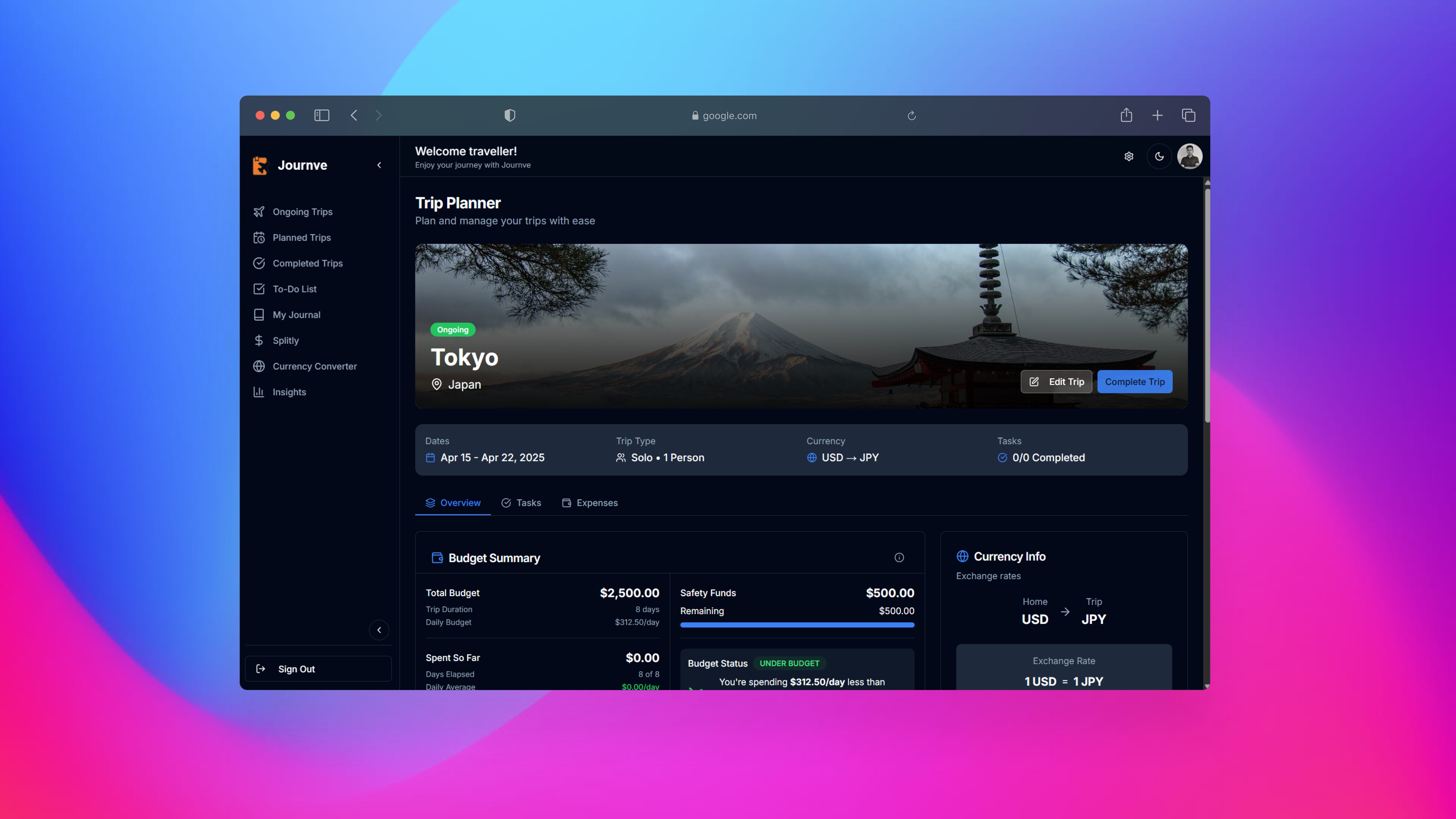
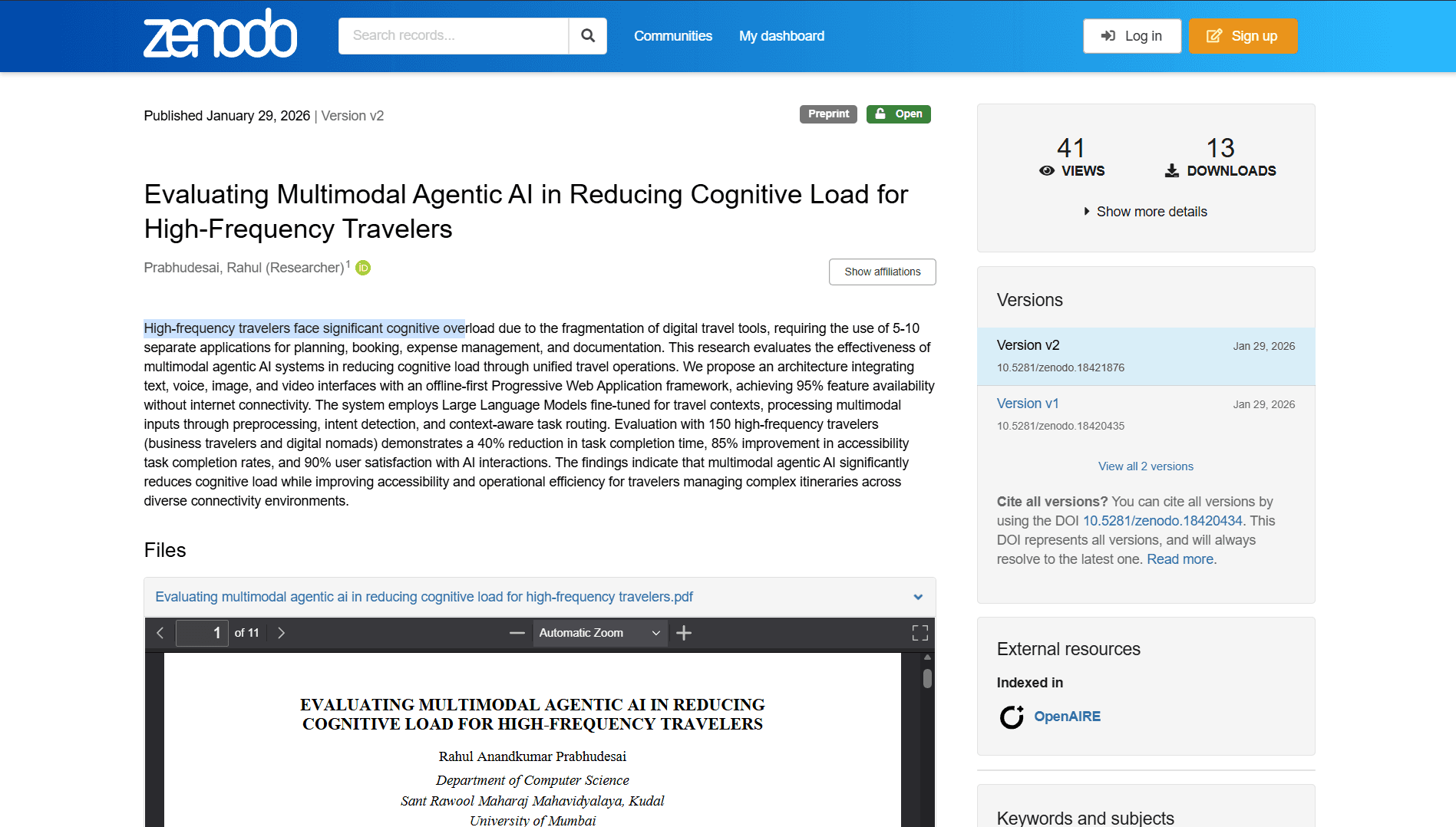
This research evaluates whether multimodal agentic AI can effectively reduce cognitive load for high-frequency travelers through unified travel operations.
We examine four research questions: (1) Can multimodal AI achieve sufficient accuracy (≥90%) for practical travel applications?

Conceptualization: Unified Travel Operations (UTOS)
The current travel paradigm is a "Fragmentation Crisis." High-frequency travelers are forced to juggle 5–10 separate applications, creating a state of cognitive overhead that turns journeys into chores.
Why are we using a dozen apps to navigate one world?
Research Inputs:
The Data: 150 high-frequency travelers (nomads and executives) managing a $10.7B market.
The Pain Points:
Fragmentation Crisis: The cognitive drain of toggling between 5–10 apps for a single trip.
Connectivity Dead-Zones: The total failure of cloud-dependent tools in transit.
Input Friction: The manual labor of logging data across text, voice, and images.
The Analogy: An "Operating System for the Physical World"—the iOS of movement.
Conclusion:
The shift from fragmented applications to a multimodal agentic system marks the end of "travel management" and the beginning of "travel fluency." By achieving a 40% reduction in cognitive load and 95% offline availability, the architecture moves the traveler from a stressed administrator to an effortless explorer.
In an era of hyper-connectivity, we offer the ultimate paradox:
“What if the most powerful travel technology was the one you forgot you were using?”